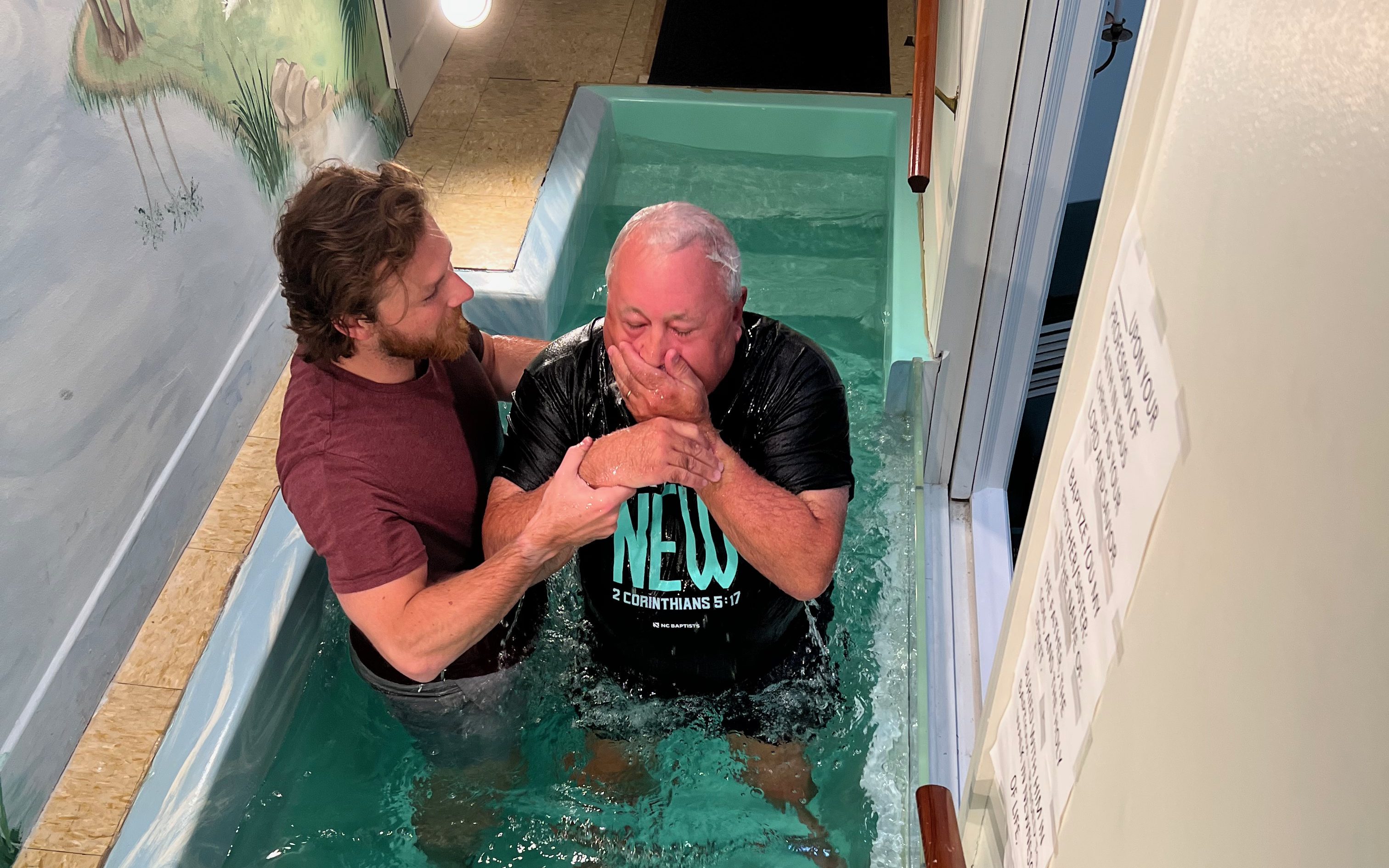
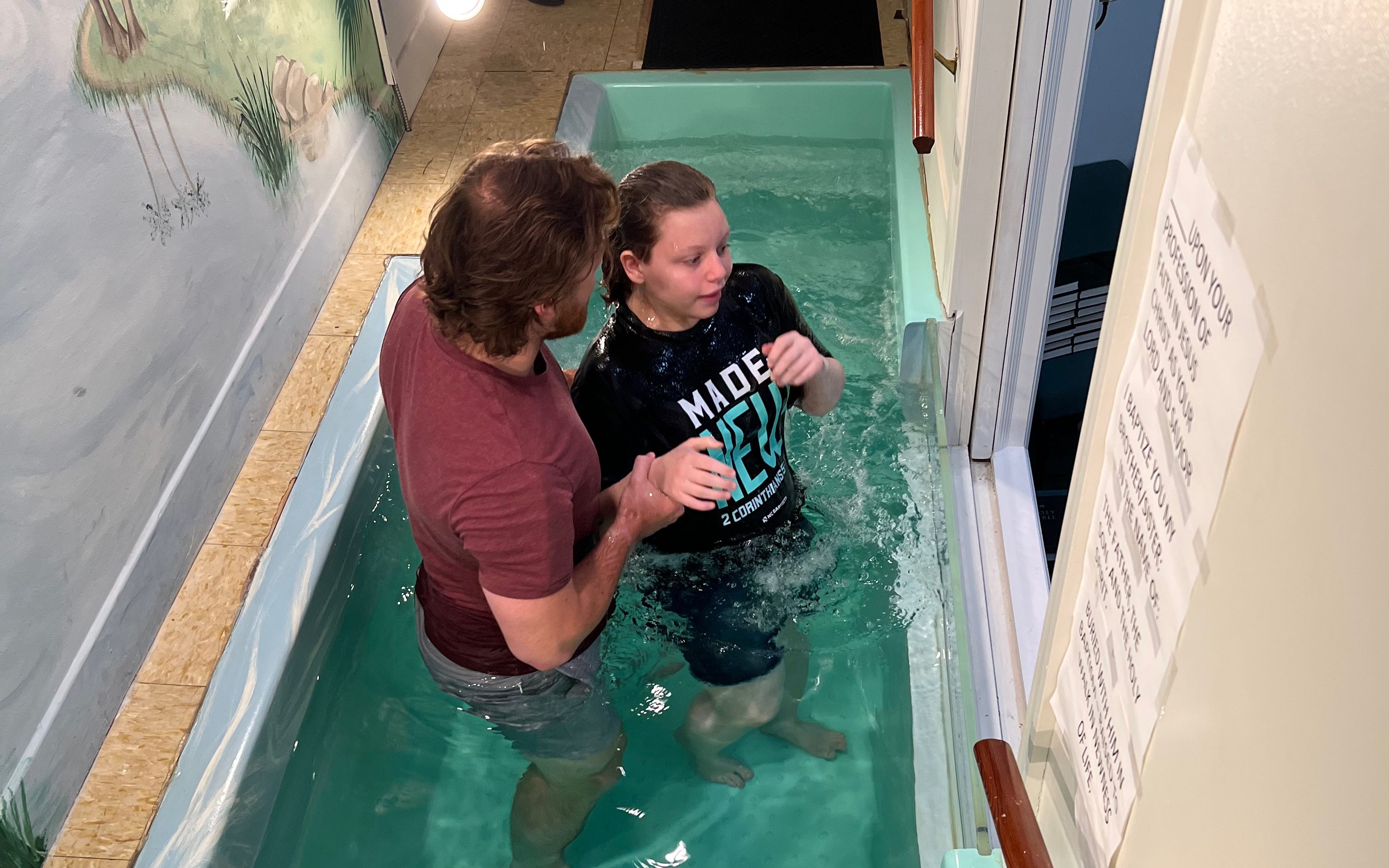
In this article, you’ll see pictures of a wonderful day in the life of our church – we baptized two people! Elika and Alan have very different stories, but they are now official members of our family, through the act of baptism. But I want you to consider for a moment – what’s the point of baptism? If you grew up in a different tradition, you might have seen it done differently. Some sprinkle babies, some pour water, but we baptize folks like I dunk my oreos in milk: full immersion. But why? Is it a matter of preference? Tradition? For us, baptism is a deeply theological thing and incredibly meaningful. It’s one of the most important things we do as a church family. Baptism is both an individual and community action of memory and hope in the Gospel. Baptism is a believer’s public proclamation of their faith in Christ to the church, who welcomes the new believer as one of their own.
A Vivid Family Drama
Your Bible has a lot of water in it. I don’t mean that it’s soggy, but it is flooded with pictures of people going into water in death and coming out of water in life. Think of the story of Noah and the flood, the deliverance of Israel from Egypt through the Red Sea, and Jonah’s unpleasant experience in the belly of a fish and his second chance in life. Baptism is meant to recall each of these stories in Scripture and tie them together in Jesus Christ. He is our great deliverer, who died and rose again to deliver us from sin and to give us life, that we could enjoy him and invite others to enjoy him with us.
We live in “live and let live” society. We’re what sociologists call individualistic people – we’re independent and self-reliant. There are good things about that, but our individualism also contributes to the unprecedented fracturing, loneliness, and isolation that so many folks feel today. Baptism, in a way, is a rejection of unhealthy individualism. To be sure, salvation is personal. You aren’t saved on account of your grandma’s faith. You have to trust in Christ to be saved. But you weren’t just “saved.” You were saved into the body of Christ – that’s the church! Peter says that we were made into a kingdom of priests, a holy nation. That’s why it doesn’t make sense to be a Christian and not be an active part of a church. That’s why we baptize people into local church. That’s why we require it for membership. West End is one physical sign of the world-wide, historic church that began with the apostles. In the same way, baptism is a physical sign of the spiritual transformation of a believer from death in sin to life in Christ. That’s what we’ll consider next.
Baptism is a dramatic affair. Now, you might wonder in suspense about how long they’ll stay under, or whether they’ll splash water onto the choir below, but what I mean is that it is a drama, a play of sorts. What happens internally to a Christian is acted out in baptism. When Alan and Elika were baptized, they both showed the church that they each are participating in Jesus Christ’s own death and resurrection. It’s our job as a church to affirm this – that’s why a church member does the baptizing. When Alan and Elika went underwater, they showed the congregation their death to sin. We had a burial service in that moment. The moment they repented of their sins and trusted in Jesus, they chose to identify with and participate in Christ’s death. But it wasn’t just a burial. It was a washing too. Submersion in baptism is also a washing away of sins. Water is what we all use to wash things, so it’s what is used in baptism to signify the cleansing of the believer from sin. Don’t worry, we’ll never put soap in the water! Ezekiel prophesies about this in Ezekiel 36, that God would cleanse his people with water. Like the God-rejecting humans of Noah’s day drowned in the flood, the God-rejecting Egyptians perished in the Red Sea, and the God-rejecting Jonah sank to the depths and was swallowed by a fish, the God-rejecting, sinful “flesh” is plunged into the baptismal waters, and it dies there.
But thankfully, Alan and Elika didn’t stay under! When we raised them up out of the water, they identified with Jesus’ resurrection. Paul talks about our salvation as being raised with Jesus out of death and seated in the heavenly places. Christians are given a new identity. They have Jesus’ righteousness, and the Spirit of God comes to dwell in him and put Jesus’ salvation into effect. Just as Noah was safely carried through the flood that destroyed all other life, the believer is delivered from the wrath of God that will come to those who reject Jesus. Just as Israel was brought through the Red Sea to the other side, the believer is brought out of slavery to sin and has the hope of Heaven, where he will dwell in the Promised Land, the New Jerusalem. Just as Jonah was spit out on dry land to proclaim the word of the Lord to the nation of Nineveh, the believer is placed on God’s mission, to proclaim the Gospel to all nations. Just as Jesus rose from the dead in victory over death and in everlasting life, the new believer will have everlasting life, and death loses its sting.

 Cade Patterson